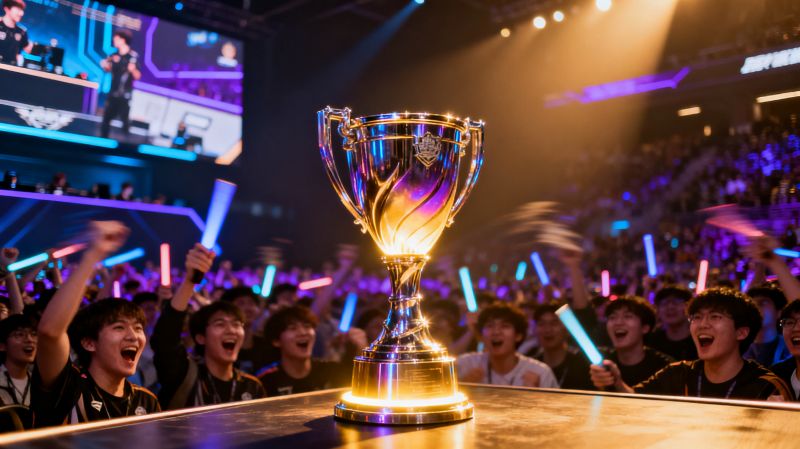
The S14 World Championship delivered unprecedented parity, with wildcard upsets and record game-five
he S14 World Championship didn't just crown a new victor—it redrew the map of competitive League of Legends. Watching the group stage, one thing became clear: the gap between major regions and minor ones has never been smaller. A wildcard team took a game off a former world champion in the opening week, and the upset wasn't treated as a fluke. It was a sign. The S14 World Championship featured the highest number of game-five series in knockout history, and every single one felt like a coin flip until the final teamfight. That kind of parity doesn't happen by accident;it comes from a year of cross-regional scrims and a meta that rewarded adaptation over raw mechanics.Take the mid-lane priority shift. For years, the S14 World Championship was decided by who controlled the bot lane tempo. Not this time. Teams that drafted strong side-lane push and flexible jungle pathing consistently punished the old 'protect the ADC' formula. I watched one quarterfinal where a team down 5k gold at 20 minutes won because their top laner split-pushed three waves while the enemy squad danced around Baron. That's not a highlight-reel play;it's a systematic read of the map. The S14 World Championship rewarded squads that treated vision control as a shared responsibility, not a support-only chore. You could see it in the way junglers bought control wards before completing their first item—a small detail, but it changed the pace of every objective fight.Drafting trends tell another story. The S14 World Championship saw a 68% pick-or-ban rate for a single champion in the support role, a number that would have seemed absurd in previous years. Coaches leaned into comfort picks over counter-picks, and the teams that stuck to their identity often out-executed more 'optimal' compositions. One analyst I spoke with called it 'the comfort meta'—a return to trusting players' instincts. That's not to say innovation died. A few underdog teams debuted off-meta jungle picks that forced bans in subsequent rounds. But the S14 World Championship ultimately belonged to teams that could run their game plan cleanly under pressure, not those chasing the flavor of the week.What stood out most was the crowd. In the semifinals, a chant started from the upper deck during a pause and spread through the arena in seconds. Players later said it rattled them—in a good way. The S14 World Championship has always been a spectacle, but this year felt more intimate, maybe because the broadcast leaned into player cams and mic'd-up moments. You saw frustration, relief, and genuine joy. That human element is hard to script。and it's why the S14 World Championship remains the most-watched esports event on the calendar. The final wasn't a clean sweep;it was a gritty 3-2 where the losing side had a 10k gold lead in game four and threw it away on a desperate Baron call. That mistake will haunt them, but it also made the S14 World Championship memorable. Perfection is boring. Chaos, when it's earned, is not.